
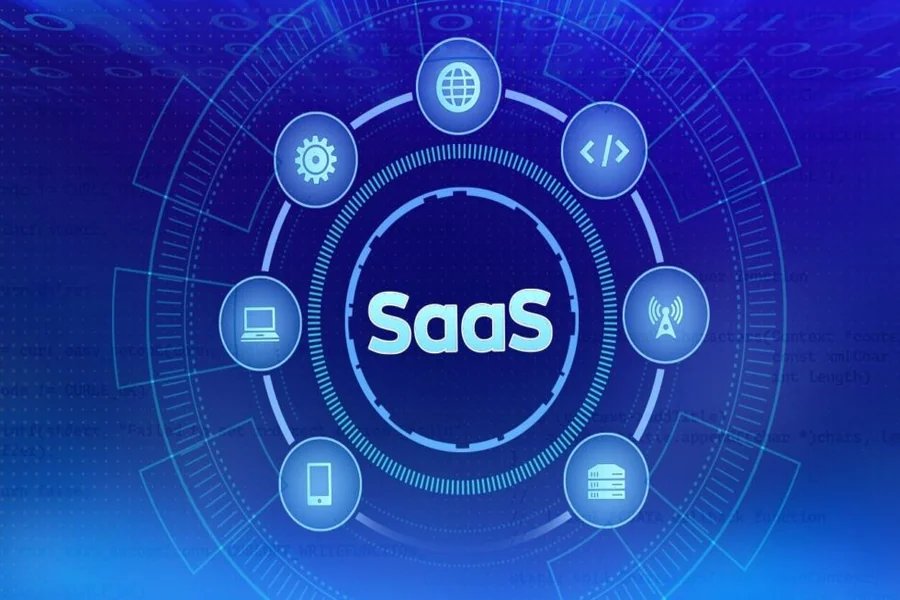
Software As A Service In Cloud computing has turned out to be one of the most powerful technologies in the digital realm. The users are no longer required to install software in their individual devices, instead they can use the applications through the internet.
The transformation has transformed the way businesses are conducted, partner and expand their services. SaaS solutions have become part of everyday business, whether a small start-up or a global enterprise.
The ease of accessing tools at any time and at any place has made it a favorite model to the contemporary organizations. With the internet infrastructure still in the upward trend, the use of cloud based service is becoming more widespread in industries.
What is Software As A Service In Cloud computing?
Fundamentally Software As A Service is an internet-based approach to delivering services in which applications are provided by a vendor and are accessed by consumers via the Web.
Rather than buying software license and systems, users are subscribing services on monthly or annual basis. There is no need to install complex structures and update these structures on a regular basis since all this is handled by the service provider in this model.
All that users require are a browser and an internet connection. The typical activities that are carried out with the help of SaaS include email communication, customer relationship administration, project collaboration and data storage.
This model is very appealing due to its flexibility and simplicity that make it very appealing to all kinds of businesses.
The main advantages of SaaS Solutions
Cost effectiveness is one of the greatest benefits of SaaS. There is no longer a need by the businesses to spend a lot on the hardware or software infrastructure. Rather, they are able to pay as they utilize, thus budgeting can be predicted.
Accessibility is another significant advantage. The teams may work anywhere without commotion, and this is particularly valuable in the current working remotely world.
Automatic updates help to keep users in the know about the latest features and security enhancements without taking any manual action.
Theother consideration is scalability. Businesses are able to tailor their subscriptions depending on their requirements, when they are expanding at an alarming rate or reducing.
Furthermore, the SaaS services are usually accompanied by a set of security features, which does not require excessive work of the IT departments of the company.
The way SaaS changed the way business is done
SaaS has a great influence on the activities of business. It enables companies to automate the process and enhance communication of members of a team.
The employees will be able to share files, communicate in real time and manage projects more effectively with cloud-based tools. This brings high productivity and decision making.
SaaS also allows companies to concentrate on their key operations as opposed to wasting time on IT infrastructure maintenance.
Most SaaS systems have features of integration, enabling businesses to interface the platforms together and form an uninterrupted digital ecosystem.
It is an interdependent style that assists businesses to become more aware and enhance performance.
Typical SaaS Usages
The applications of SaaS are very diverse and can be employed in numerous industries and purposes. Accounting, human resource management and customer support tools are widely provided by way of SaaS within the business environment.
Online learning and collaboration platforms created by cloud-based services are used in educational institutions. Medical professionals have SaaS solutions that assist them in managing patients and storing data.
Users also utilize SaaS applications on their daily activities like email, file sharing and entertainment.
The flexibility of SaaS allows it to be suitable to nearly any kind of user. With the technology undergoing a development, there are more and more application cases, which move the scope of the cloud-based services even further.
Challenges and Considerations
As much as SaaS has numerous advantages, it does not come without its own challenges. The security of data is one of the primary concerns. Considering that information is kept in remote servers, the businesses are forced to trust the services providers to safeguard their information.
Internet dependency is another problem. In the absence of a stable connection, the access to SaaS applications may be disrupted.
Customization can also be limited, with certain platforms not permitting much customization. Another consideration is vendor lock-in since at times, it is not easy to change providers.
Nevertheless, in spite of all these difficulties, most organizations realize that the benefits are more than the costs particularly when they use trusted and well-established providers.
SaaS Future in Cloud Computing
Software As A Service In Cloud Computing has a bright future. SaaS platforms are getting increasingly smarter and more effective with the progress in artificial intelligence, machine learning and automation.
There will be increasingly personalized experiences and better analytics abilities in businesses. This will also promote the functionality of cloud-based applications as the emerging technologies are integrated.
The need of SaaS solutions will only be increasing as more companies turn to digital transformation.
This tendency will probably lead to more innovation and new opportunities of both the providers and the users. Movement to cloud computing is not only a trend but also a change in the long run in terms of the methods of technology delivery and consumption.
Final Thought
Software As A Service In Cloud Computing has revolutionized how software is accessed and utilized. It is a vital tool to businesses and people of today because of its flexibility, ease of use, and cost-effectiveness.
As much as some obstacles must be taken into consideration, the advantages of SaaS remain overwhelming in the digital world nowadays.
With the further advancement of technology, the SaaS will become even more significant in the future of work and innovation.
FAQs
What is Software As A Service in simple terms?
Software As A Service is a cloud-based model where users access software through the internet instead of installing it on their devices.
How does SaaS differ from traditional software?
Traditional software requires installation and maintenance on local systems, while SaaS is hosted online and managed by the provider.
Is SaaS secure for businesses?
SaaS can be secure if the provider uses strong security measures such as encryption, regular updates, and data protection protocols.
What are some examples of SaaS applications?
Common examples include email services, project management tools, customer relationship management systems, and cloud storage platforms.
Can SaaS be customized for specific business needs?
Some SaaS platforms offer customization options, but the level of flexibility may vary depending on the provider.
Do I need a strong internet connection to use SaaS?
Yes, a stable internet connection is essential to access and use SaaS applications effectively.
Is SaaS suitable for small businesses?
Yes, SaaS is ideal for small businesses because it reduces costs and provides access to powerful tools without heavy investment.
