
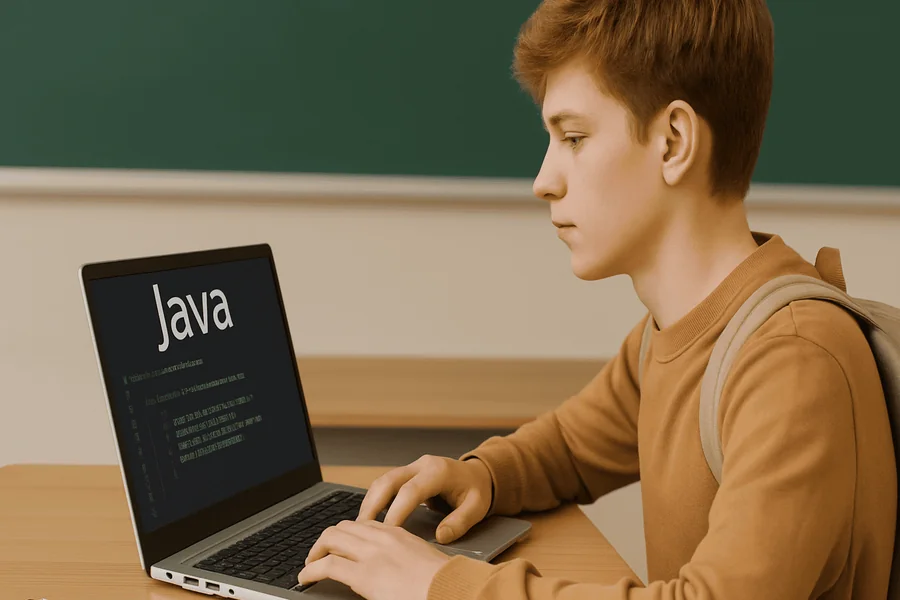
Java is not a new programming language and rightly so. It is common in software development of applications, Web systems and even in large company software. In the case of high school students, Java can be a good introduction to the basics of programming that can be readily transferred to other programming languages in the future.
The clarity of the Java structure is one of the largest benefits of this language. It shows students how to reason, how to divide problems into smaller sections and how to write clean, well-structured code. These are not only programming skills, but life skills which can make students better in academics and otherwise.
Java is also platform-independent, i.e., the code written on it can be executed on other devices. This renders it an effective and usable language by the novices who desire to get real life outcome in the learning process.
Advantages of Java Programming courses to High School Students
High school Java programming classes offer high school students more than technical knowledge. They assist in the development of approaches and critical thinking amid challenges in young learners.
To begin with, students gain skills in problem solving. Code writing involves comprehending a problem and seeking solutions in steps. This development develops patience and persistence that can be of a good use in any field.
Second, creativity is promoted in these courses. Students are able to develop games, applications, or basic tools and make their ideas come to a reality. Such practical methodology makes learning interesting and valuable.
Exposure to careers at a young age is yet another advantage. Java is utilized in many industries so an early knowledge of it benefits the students. This knowledge can open opportunities to them regardless of whether they wish to be software developers or consider other tech-related positions.
Lastly, the Java courses tend to enhance academic performance. Coding can result in logical thinking and analysis abilities that are applicable in other courses such as math and science.
The content of a standard Java course
Properly designed high school Java course typically begins with the fundamentals and progresses to further complex ideas. The learning process is to be made simple and easy to understand.
Students start with the basic notions such as variables, type of data, and operators. These are the blocks of any program. After they learn these, they proceed to control constructs like loops and conditional statements.
Then they get to know about object-oriented programming (OOP), which is a fundamental aspect of Java. Class, object, inheritance, and polymorphism are concepts that may seem complex but are taught in an easy and simplified manner befitting of a novice.
Later into the course, small projects are common with the students. Such projects make them strengthen what they have been learning and have confidence in their skills. At the conclusion of the course, a lot of students are capable of coming up with simple applications.
Making the Best Use of High School Students
Not every programming course is the same, which is why it is essential to select the appropriate one. The best course in Java ought to suit the student in terms of abilities and learning preferences.
As a beginner, it is advisable to begin with courses that do not have any prior coding experience. Such courses typically involve step-by-step lessons, stimulating tasks, and straightforward initiatives.
Teaching style is another significant aspect. Wenn courses are based on visuals, real-life examples, and practical activities, they will be more useful to high school students. The process of learning must not be demanding.
It’s also helpful to look for courses that provide support, such as access to mentors or discussion forums. This enables students to pose questions and get motivated during the learning process.
Lastly, flexibility matters. Online courses can prove to be an excellent choice as students are able to study at their own pace, and can repeat lessons should the need arise.
The Java Learning options can be online or offline
Today, students have the option to learn Java either online or in a classroom setting. Both alternatives have their pros.
Online classes are very flexible. Students have the ability to study at home, make their own schedule and have access to a variety of resources. Interactive coding environments are also available on many platforms and one can easily practice without having to install the software.
Offline classes, on the other hand, provide a structured environment. The students will be able to communicate with the instructors and students directly and this may make the learning process interesting. The other advantage of face-to-face learning is immediate feedback.
Combining the two is most effective among a number of high school students. They will be able to attend classes to be guided and to get additional practice online.
Java Learning Success tips
Java can be an exciting learning process that cannot be done without commitment. Through the correct attitude, high school students would be able to make the best out of their programming career.
Consistency is key. It is better to do a little practice day-by-day than to study long hours at a time. Frequently practicing will support ideas and gain confidence.
It is also important that the students should not memorize but understand. Coding is logic and as such, it is important to know why something works and not how.
Another excellent way to learn is working on the projects. Simple projects can help in creating an impact of the real world application of Java even in simple projects.
It’s also important to stay curious. Learning can be more enjoyable and rewarding through asking questions, trying new ideas and experimenting with code.
And finally, students must not be scared of errors. Errors in programming are natural and normally results in improved understanding.
Final Thought
Java high school programming courses provide a good experience of acquiring the necessary skills at an early stage in life. The payoffs extend much farther than the coding per se, starting with logical thinking, creativity, and problem-solving.
The students can make their interest in technology a solid stepping stone to the future by making the right choice and remaining focused. Their future career in tech or not, the knowledge acquired when learning Java will never be wasted.
FAQs
- Is Java too difficult for high school students?
No, Java can be learned step by step. Many courses are designed specifically for beginners, making it accessible and easy to understand. - How long does it take to learn Java basics?
Most students can grasp the basics within a few weeks to a couple of months, depending on how much time they dedicate to practice. - Do students need prior coding experience?
No prior experience is needed. Beginner courses start from the very basics and guide students through each concept. - What can students build after learning Java?
Students can create simple games, apps, and small software projects. As they advance, they can work on more complex applications. - Are online Java courses effective for high school students?
Yes, online courses can be very effective, especially when they include interactive lessons, projects, and support resources.
