

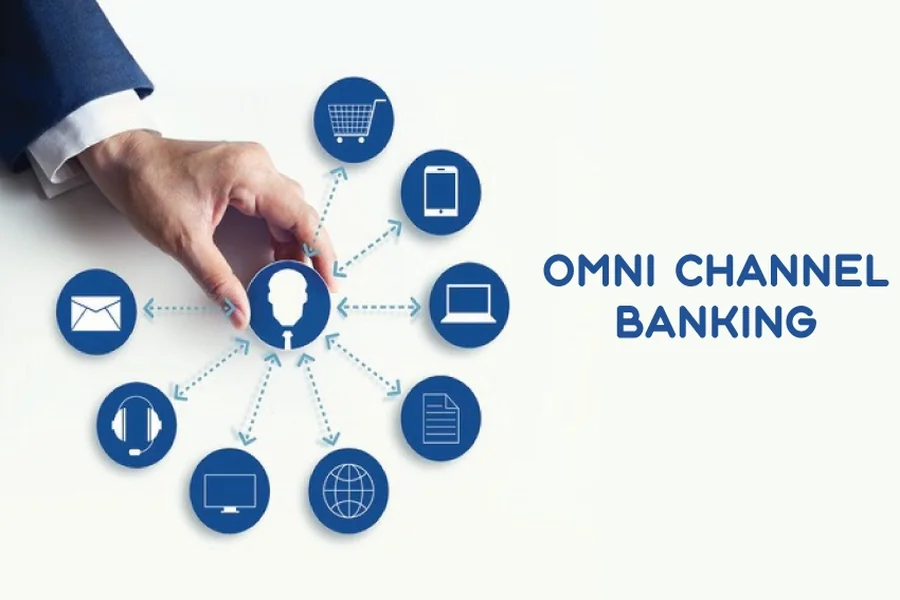
Omni Channel Digital Banking Solutions are redefining the ways in which financial institutions interact with their customers in a more digital world. The current users demand to experience fast and uninterrupted services regardless of whether they are using a mobile application, accessing a webpage or walking into a brick-and-mortar branch. Banks, which are unable to live to these expectations, may find themselves becoming irrelevant, whereas those that adopt integrated systems can forge a better relationship and enhance customer satisfaction. Omni channel strategies enable customers to easily cross-platforms without losing any context or convenience by integrating various touchpoints into one unified experience.
What Do Omni Channel Digital Banking Solutions Entail?
Omni Channel Digital Banking Solutions are a single approach in which all channels of the bank, including mobile apps, online portals, ATMs, call centers, and physical branches are linked. These channels do not work in silos as they share data and give a consistent experience.
This implies that a customer might begin a transaction via his phone, move to a laptop and complete it at a branch without repeating the process. It is a system that stores preferences, log activities and provides continuity across all platforms. This is a higher degree of integration than traditionally multi-channel banking where all channels are independent.
Fundamentally, omni channel banking is about customer convenience, personalization and smooth interaction. Not only providing several choices but making those choices fit harmoniously is a matter of concern.
The Major Characteristics that Propel Success
Real time data syncing is one of the characteristics of omni channel banking. This guarantees that customers can get information updated in real time on all platforms, and interact properly and at the right time.
Personalization is another factor. Banks are able to understand customer behavior and customize services, offers and communication. To illustrate, a client who has used mobile banking regularly might get notifications in their app or specific financial guidance.
A vital element is security as well. Having various points of access, it is important to have a well-developed authentication schemes that range to biometric, multi-factor authentication, and encryption techniques, to secure sensitive information.
Also, easy interfaces are significant. The design should be user-friendly and congruent whether the customers are using a mobile application or a webpage. This decreases friction and helps to improve the experience.
Integration with third-party services is another key feature. A large number of current banking systems are interconnected with fintech services, payment gateways, and financial products to provide more services.
Advantages to Banks and Customers
Omni Channel Digital Banking Solutions offer huge benefits to financial institutions and their customers. The enhanced retention of the customers is one of the greatest advantages that banks will enjoy. Users will be more likely to remain loyal when they have a smooth and reliable experience.
There is also enhanced operational efficiency. Through integration, banks are able to save unnecessarily on redundancy of work, shorten process cycles, and save on expenses. Centralized data can be accessed by employees and it is simpler to serve customers who require quick and effective service.
Convenience is the most conspicuous advantage to the customers. They are no longer bound to one platform as they can transact anywhere and anytime. Such an element of flexibility is particularly relevant in the contemporary fast-paced environment.
Consistency is yet another strength. The customers are accorded the same standards of service and information access irrespective of the channel they are using. This develops trust and confidence with the institution.
Even personalization increases the experience. Individualized tips, alerts and information enables users to better control their finances.
Challenges in Implementation
Although there are benefits that come with implementing omni channel banking, it is not without difficulties. The incorporation of old systems with new technology is one of the greatest challenges. A lot of banks are still using an old infrastructure that may complicate and be expensive to integrate.
Another issue is data management. To achieve proper, real-time synchronization through all channels, it is necessary to provide complex systems and proper planning. Any inconsistency could give rise to confusion and dissatisfaction.
Multiple access points also pose increased security risks. To retain customer trust, banks need to invest in effective cybersecurity strategies to secure customer data.
The other difficulty is to have a consistent user experience. The requirements of different platforms can be different, and it can be challenging to align them all. This needs to be designed keenly and constantly optimized.
Training of the staff is also crucial. The employees should be equipped with knowledge on how the system operates and how to serve customers using different channels.
Future Trends in Omni Channel Banking
Omni Channel Digital Banking Solutions is related to the future, which depends on the emerging technologies. The use of artificial intelligence and machine learning in personalization and automation is increasingly becoming a part of the picture. These are technologies that are able to process large volumes of data in order to give insights to better decision-making.
The chatbots and voice banking are also on the rise. The experience is more accessible and convenient as customers can make voice commands or use messaging platforms to interact with their bank.
Another trend that is influential to the industry is open banking. Allowing third-party developers to develop applications and services enables banks to provide more innovative Digital Solutions and increase their ecosystem.
Blockchain technology can also have an impact on the future of banking as it would increase the security and transparency of transactions.
Banks will have to respond swiftly as customer expectations keep on changing. Investors in advanced omni channel strategies will be in a better position to achieve these demands.
The way Banks can effectively implement Omni channel strategies
Banks should begin with a clear plan to implement omni channel banking. Real need and behavior of customers will be vital in designing a system that provides real value.
One step is to invest in the current technology. Cloud-based platforms, APIs, and scalable infrastructure can facilitate the integration of the various channels and help to have a smooth operation.
Co-operation among departments is also significant. All departments (IT, marketing, customer service, operations) need to collaborate to develop a coherent experience.
Permanent testing and enhancement should be done to sustain performance. User feedback will aid in determining problems and refining the system.
Security should always be a top priority. Strong authentication procedures and surveillance systems can be enforced in order to mitigate threats.
Lastly, banks are supposed to be education and support oriented. Adoption and satisfaction can be enhanced by making customers learn how to utilize various channels.
Final Thought
Omni Channel Digital Banking Solutions have ceased to be a luxury but necessity in the contemporary financial world. The ever-increasing expectations among customers require banks to provide smooth, uniform and customized experiences at every touch point. Although there are challenges, the incentives greatly exceed the risks to institutes that are ready to invest in the appropriate technology and strategy. Through such a strategy, banks will be able to enhance relationships, increase efficiency and stay competitive in a world that is becoming more digital.
FAQs
1. What is the difference between omni channel and multi-channel banking?
Multi-channel banking offers multiple platforms, but they operate independently. Omni channel banking integrates all platforms to provide a seamless and consistent experience.
2. Why are Omni Channel Digital Banking Solutions important?
They enhance customer experience, improve efficiency, and allow banks to deliver personalized services across all touchpoints.
3. Is omni channel banking secure?
Yes, when implemented correctly with strong security measures such as encryption, biometrics, and multi-factor authentication, it is highly secure.
4. How does omni channel banking improve customer satisfaction?
It provides convenience, consistency, and personalization, allowing customers to interact with their bank effortlessly across different platforms.
5. What technologies support omni channel banking?
Technologies such as cloud computing, artificial intelligence, APIs, and data analytics play a key role in enabling omni channel solutions.
6. Can small banks adopt omni channel strategies?
Yes, with scalable cloud-based solutions and proper planning, even smaller institutions can implement effective omni channel systems.
